- V-Ray Settings provide control over the parameters that adjust the rendering process. They can be accessed from the Asset Editor in the Settings tab. V-Ray Settings are organized in two panels - the main one exposes the default options for scene setup.
- V-Ray Final Setting Part 2 / Read the first part: V-Ray Interior tutorial It’s time to render. Until this step images usually comes with noise and splotches. It’s due to a test settings: these produce not perfect outcomes but really fast to render. Now, the goal of this step is to get clean images.
In this Vray quick tip video, learn how to adjust the size and quality of your renderings in Vray!
Vray Settings For Glass

In this video, I just wanted to give a quick run-through on how to adjust the resolution and size of your renderings in Vray for SketchUp, as well as your quality settings.
When you’re working with renderings, you don’t want to do your test renders on super high setting, super high resolution images – the larger your image, and the higher your settings, the longer your rendering is going to take.
This is a model from a tutorial I did on my other channel, the SketchUp Essentials, teaching you how to use HDRI images for lighting and backgrounds within your models.
All of the options we’re going to change are located within the settings tab of the Vray asset editor.
Vray Resolution Options
For VRay Light Settings you can go Here. The most important thing when rendering are the options associated with Light and How Light Reacts and Bounces off Certain Objects and Materials, like Indirect Illumination, Irradiance Map, Camera, Environment, and Light Cache. Since Vray 3.0, the position of the rollouts have been changed. Users coming from V-ray 2.4 or lower will need some time to adjust! As you can see in the image below, there are 3 tabs that belong to Vray: Vray; Indirect illumination; Settings.
- First of all, let’s take a look at our resolution options. Click on the gear to get into your render settings – If you look down, there’s a little arrow for render output. Within this section, you can adjust the resolution and aspect ratio of your rendering.
- The safe frame is going to indicate which part of your viewport will be displayed when you run your rendering – it basically shows you which part of your image will get rendered with your currently selected aspect ratio.
- You can adjust the size of your image by adjusting the values within the image width/height section – note that these values will get locked to a certain Aspect ratio based on whichever ratio you have selected.
- Note that you can make these values smaller for a faster render, and larger for a slower, more detailed render.
Vray Rendering Quality Settings
Vray Settings For 3ds Max Interior
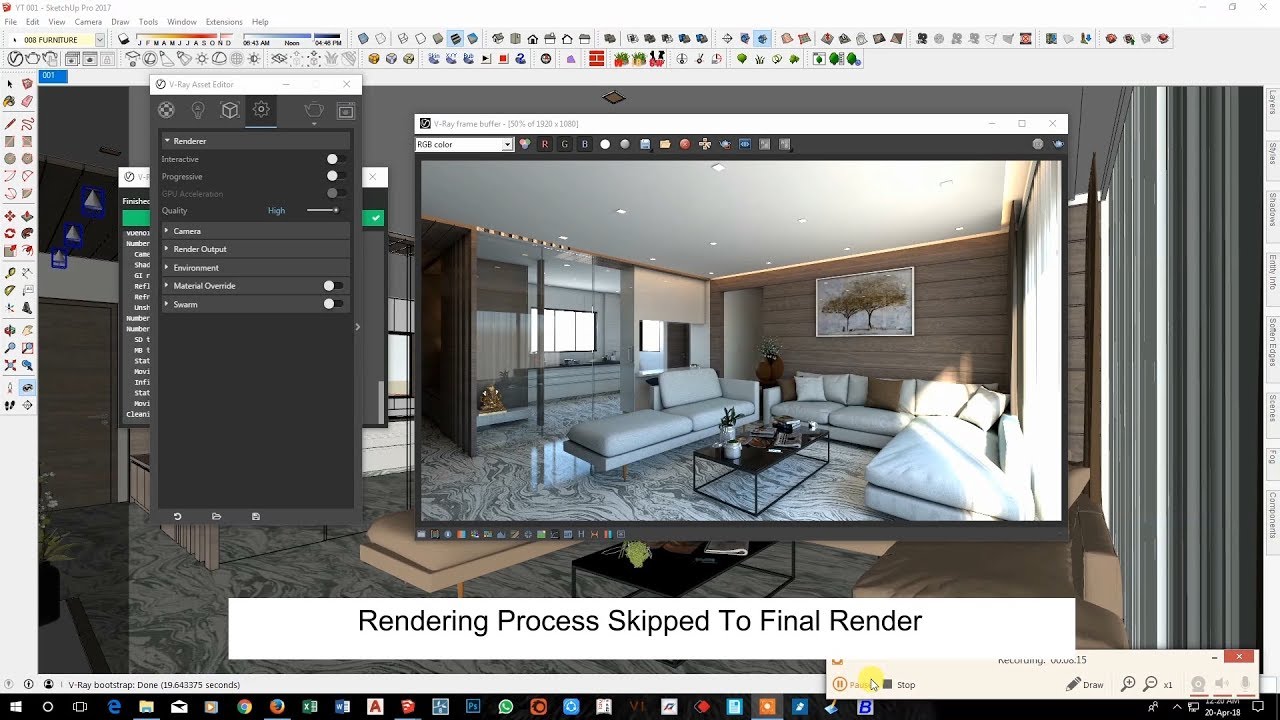
Now let’s take a look at the quality settings. To do this, go up to the dropdown labeled “Renderer.”
- Note that depending on if you have an interactive render or a regular render selected, your quality options might not show up. These options only show up if you have a regular render selected.
- Once you select a regular render, the option for quality will show up. You can adjust the bar from left to right to select quality levels ranging from Draft, which is very fast and creates a
- very noisy image, all the way to very high, which will take much longer but will generate a more detailed image.
Vray Settings For Sketchup Interior
You can adjust these settings to create faster test renders, then turn the settings up when you’re ready to create your final render!